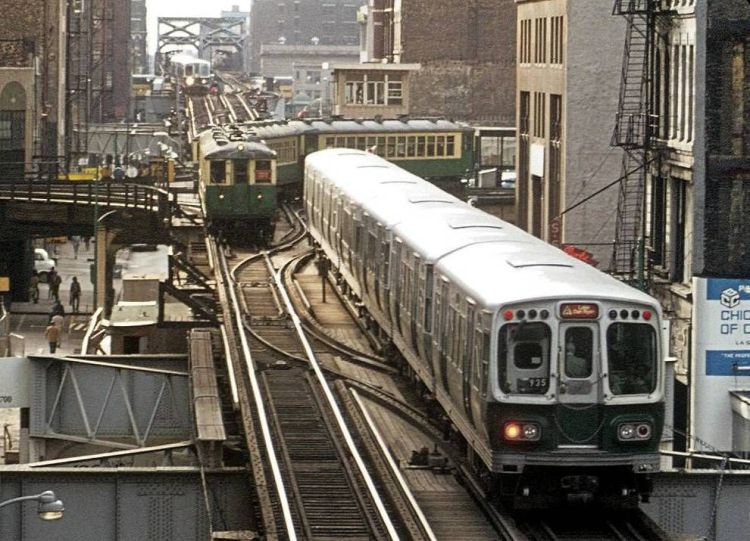
Our Saturday newspaper was folded to the real estate section, and I was wearing my trusty Keds. In the sixties, a lot of Chicago apartment leases ended October 1, so September was like a city-wide game of musical chairs, with the best places going to the quickest, most organized players. The bright morning skies filled me with nervous enthusiasm. Since my fiancé and I were from opposite sides of the color line, we thought it would be cool to live near the University of Chicago, liberal bastion that it was. But close to the University tuned out to be too expensive, so I’d circled ads for the neighborhood just a bit farther away. Nope! Nobody there hesitated to say no, no, that unit’s gone — just rented. Or to go mute and slowly shut the door. We tried the far Northside, across the line from Northwestern University. Same deal. On Sunday, at an open house with balloons and banners for a brand new, moderate income building on the near Westside, a cop looked at us and spat in the gutter.
On Monday, Emmon called me from his office. His boss had given him a tip. A woman from a far south suburb had a place she could show us in Lincoln Park, one of Chicago’s hippest upscale neighborhoods. The apartment was tiny, dirty and a little too high for our budget, but we took it. I never learned why this ordinary White lady in matching shoes and bag was willing to rent to us.
Getting married didn’t make us legit, the way I’d so very naively hoped. Glaring pedestrians, stone-faced government clerks, getting pulled over, cops writing up phony tickets — Chicago slowly wore us down. When our first child was born, Emmon went out East and found a job in D.C. His old friend and new boss Vernon even let us stay at his house while we searched for a place to live.
With the memory of Chicago’s landlords still fresh, I devised a system for weeding out trouble before it was staring us in the face. My plan had three steps: first, circle ads for one-bedroom apartments we could afford. Second, call the landlord and ask if there were parking, laundry—tight-budget family amenities. Third, ask if they adhered to the Civil Rights Act of 1968. It was this law that had finally addressed discrimination in housing. After a few landlords told me that no, they were sorry, but no, I went to Emmon in despair, and he turned around and went to his friend. Vernon made a call or two, and soon we were moving into a spacious apartment in a well-kept blue collar Black neighborhood.
Years later, when I would tell my Black friends about my three-part plan, they would burst out laughing.
“It’s so you, Gail,” my friend said, “so you!”
I was known for being organized, but in this case I’d organized mere futility. Instead of launching my solo phone crusade, what I should have done was learn from the Black people around me. There wasn’t just a “Green Book” that let you know who would offer you a hotel room on the road; in fact, there was an extensive Black network about all kinds of things. I’d seen it work once, when we were led to our first apartment in Chicago, this unwritten system of tips and connections. In fact, it had worked perfectly, but I wasn’t ready to trust it. I was beginning to see how deep racism ran, but I couldn’t yet see all the ways Blacks had devised for surviving it.
#race
#racism
#chicago history
#crossing the color line
#white wife
 WhiteWifeChicago1968.blog