Featured

White Wife/Blue Baby

I’m using the title White Wife/Blue Baby for my forthcoming memoir. When the phrase first hit me, my psychological hair stood on end. I married across the color line in ‘68, and our daughter was born not getting enough oxygen, two facts with ambulance sirens attached to them.

When I first referred to my title in an email, I discovered that white wife is also a porn category. Invitations to purchase biracial erotica started piling up. The concept was not a white woman whose husband is Black, but a prim blonde lady who breaks her marriage vows because she suddenly can’t resist sex with a huge Black man. I opened the first one by mistake, not realizing what it was, accidently insuring that it would keep coming.  For unknown reasons, it has finally stopped, though this blogpost will probably start it again.

What I could surmise from the email titles, and what I knew from watching pedestrians stare at my crotch when I was out with my then-husband, was that interracial sex was the most breathtaking transgression Americans could imagine. Early on, I would quickly and furtively check that my jeans were zipped. But they always were, and the problem wasn’t my clothing.  Instead, the zone of privacy to which we are normally entitled walking down the street had been ripped away — privacy you don’t know you have until it’s gone.

I’m staying with the title, not because I want to do battle with Big Porn, but because while I was married to a Black man, I saw things and experienced things that a white person would have a hard time learning any other way. Things that went far beyond crotch-glancing.  Traffic stops for nothing. Chicago cops whose stares said you should die. Apartments that had all just been rented.

I call on other white partners, especially those who crossed the line decades ago, when a mixed couple was rare. It’s time to talk out loud about racism’s ability to lower you into a concrete bunker with no windows and no doors. Young white people have joined Blacks in the streets to call out racism. Let’s write about it. Let’s shout about it.
Featured

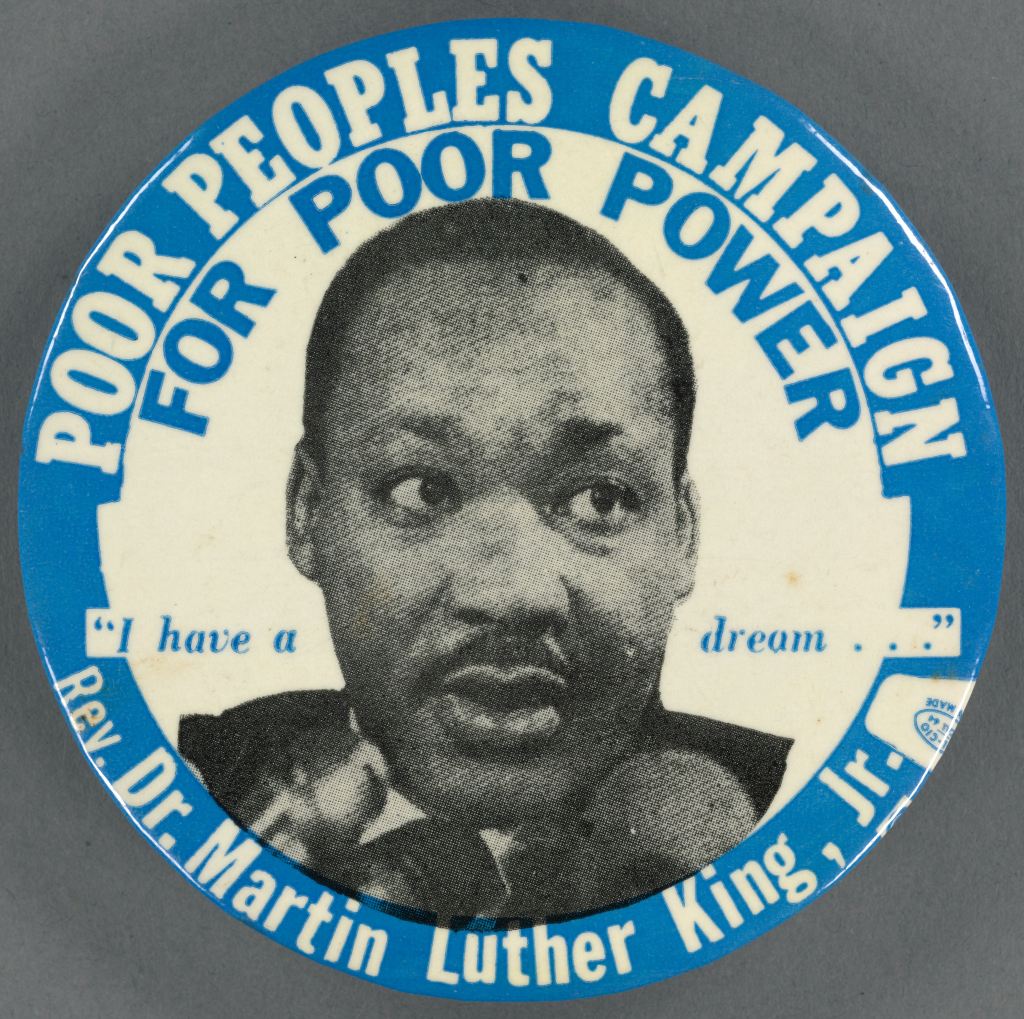
Today April 4 MLK’s Anniversary

Today April 4 MLK’s Anniversary

Fifty-five years ago today I found out that Martin Luther King had been shot when I heard someone snickering and snorting. A man was walking by the hospital room of the friend I’d come to visit. We could hear the crackle of the transistor radio the guy was listening to, so my friend, a reporter, flipped on the radio next to his bed. The news was everywhere.

The snickerer was small and thin and weathered, and he was wearing a cowboy hat, which put him just one small step above the Negroes. What had delighted him would soon set Chicago on fire. The next day, my fellow secretaries at the Catholic School Board were tense and wary. Their husbands were firemen or policemen; their neighborhoods butted up against Black neighborhoods. By noon, Black high school kids had walked out of their schools.

Our one Black secretary stared into her typewriter in silence. She was tiny and until today perpetually cheerful, ready to laugh at the slightest joke, or even at no joke at all. Her job was to integrate the secretarial staff. “Head Ni—- Up Front” or HNUF was a term I had just learned from my Black boyfriend, whom I was trying to reach on the phone.

I finally got him to answer at the Black YMCA where he worked. Sears Roebuck’s Julius Rosenwald had donated enough money to fund a new, spacious Black Y on the South Side. YMCAs in Chicago were segregated, and Rosenwald’s gift let the organization sidestep the racial justice issue. Blacks didn’t know whether to love him or hate him, the kind of debate that they were forced into over and over.

            “Hi,” I said, relieved, “Are you okay?”

            “Yeah,” he said flatly.

Then there was silence.

“I can’t talk now,” he said.

Then the line went dead.

We were dating across Chicago’s – indeed America’s — greatest fault line. We were more than dating and would be married in October of that year. Racism had roughed us up so often that I could make no sense of the fact that all Black people weren’t eaten alive by rage.

By 4:00 p.m. that day, the horizon, visible from the School Board’s 8th floor Michigan Avenue windows, was glowing red. It was fire, it was rage, it was exhaustion. It was despair.

For Sure

I got ready to leave for college on a full Catholic ride obtained by the oblivious monsignor after his rectory housemate, the sly, crooked, shifty monsignor, our pastor, had assaulted me, a secret I kept as a service to the whole world so it wouldn’t blow up the way my mind had blown up. Mom made sure I had a new pair of twin sheets and a matching mattress pad. She checked these off her mental to-do list while flashing her lighter at the Chesterfield between her lips, then sucking in slowly, maybe tamping down a faint buzz, a hazy tick that something was off.

A year or two after I’d hit the road for college, she took a job as his secretary because that way she could walk to work, Dad having driven off years before. Decades later, when the abusing cleric died, she told me, looking right at me, that he had suffered at the end, relaying this last bit of news as if it were important punctuation. I looked away, not wanting her to know even if she did. Then she told me that she did not think Monsignor was an honest man. “Well, that’s for sure,” I could have said, but in my mother’s apartment the silence about trouble had always been thicker than Jell-O, cloudier than dish water, darker than the insides of our shoes.

The Roman Catholic Church

For Women’s History Month: My Hero Mother

My mother needed to stop Dad from tearing the house apart looking for the twenties, fives, and tens she’d gotten when the bank cashed her paycheck but wouldn’t let her open an account without her husband’s signature. It was the sixties, but in the Midwest, in the suburbs, it was still the fifties.

I’d get home from school and find all my dresser drawers open, askew, as if they’d been yanked out.  I shut down the idea that it had been my father. Then I shut each drawer one at a time, as quietly as I could so my brothers couldn’t hear. It wasn’t something you could talk about. Later, much later, I learned that Dad had been looking for money, but I didn’t know there was any money hidden in the house. Mom didn’t trust us to keep it from him, to resist his gentle pleas that he just needed a dollar or two.

Finally, some judge granted her a restraining order.

When I got back from a week with my friend’s family “up North,” as it was called, in the lake country of Wisconsin, I asked Mom where Dad was, meaning asleep upstairs with his clothes on, or had he been missing for a day or two? Mom answered me by saying he was gone. Relief took a trip through my brain instantly, uninvited. I could tell by the way she told me that she wasn’t just saying he had disappeared, leaving me to understand he would turn up sooner or later, stumbling and blurry with his acrid breath. I couldn’t help not caring where he’d gone. I adored my father, but, in that moment, there was just the relief.

Sideways

I started out as a nature poet, and one thing I like to do in January is make fun of the sun. Because, as the source of all life on this planet, it’s sideways. The beams are so angled that noon seems like twilight. At no hour does the sun actually make it all the way up in the sky. Those of us whose nature it is to equate short days with dullness of heart can barely keep it together through a cloudy week in January.  We’ve been suffering since nearly Halloween.

After the solstice low point on Dec. 21, sunset should have begun its retreat, one might posit, but clearly there was no hurry. We didn’t gain a lousy daylight minute until Dec. 26!

My decades of working were office-bound. There was always that Monday after daylight savings had evaporated when I left my windowless cube and encountered the lobby’s black glass walls. My car and the entire parking lot had disappeared into the void.

Now as a full-time writer, in a house with glorious windows, I often pull myself out of bed at dawn to tinker with words and to watch the sun climb, even when it’s not going to get too far. Born into the 20th century, I’m one of the lucky ones: a woman who did not die in childbirth, who did not have six kids and die of exhaustion or disease at forty. Here I am in my 70’s, with a book out. I close my eyes and face the sun.

#gratitude #nature #January

Separation of church & state?

On Jan. 4, in Vermont, Lynda Bluestein somehow had the courage to swallow drugs that would kill her. The point was to die while she could still swallow and before the vagaries of cancer left her a morphine vegetable. She freely chose a quiet death, but word of her death, I hope, will be anything but quiet.

She and I crossed activist paths when I and other SNAP (Survivors Network of those Abused by Priests) survivors tried to convince the CT Legislature to remove barriers to civil suits by victims of childhood sexual abuse. Year after year, SNAP’s efforts fail, as did Lynda’s effort to establish the right to medical aid in dying (MAID).

Neither bill was voted down. Instead, there was no vote at all. Each proposed bill was first approved by separate committees, but each was then “disappeared” by Rep. Steve Stafstrom using his power as co-chair of the Judiciary Committee.

 A fitting tribute to Lynda would be for citizens to pressure their legislators to pressure Mr. Stafstrom to allow the MAID bill a fighting chance. He admits that his Catholic faith influences his decisions on MAID. I think that might be the tip of the iceberg.

Connecticut citizens who receive a medical death sentence should not have the Catholic Church making their end-of-life decisions. To honor Lynda, may the fight now intensify.

Medical Aid in Dying

On Jan. 4, in Vermont, where it is legal, Lynda Bluestein somehow had the courage to swallow drugs that would kill her. The point was to die while she could still swallow and before the vagaries of cancer left her a morphine vegetable. She freely chose a quiet death, but word of her death, I hope, will be anything but quiet.

She and I crossed activist paths when I and other SNAP (Survivors Network of those Abused by Priests) survivors tried to convince the CT Legislature to remove barriers to civil suits by victims of childhood sexual abuse. Year after year, SNAP’s efforts fail, as did Lynda’s effort to establish the right to medical aid in dying (MAID).

Neither bill was voted down. Instead, there was no vote at all. Each proposed bill was first approved by separate committees, but each was then “disappeared” by Rep. Steve Stafstrom using his power as co-chair of the Judiciary Committee.

 A fitting tribute to Lynda would be for citizens to pressure their legislators to pressure Mr. Stafstrom to allow the MAID bill a fighting chance. He admits that his Catholic faith influences his decisions on MAID. I think that might be the tip of the iceberg.

Connecticut citizens who receive a medical death sentence should not have the Catholic Church making their end-of-life decisions. To honor Lynda, may the fight now intensify.

Thanksgiving Praise/Prose

How nourished we are by old friends!

A burst of laughter at the dinner table

Echoes down the decades.

Roast pork, smoked turkey, rice and beans, apple pie.

M. remembering giving birth

A few months before me.

How our children invented long, fantastic role play,

Gave us quizzical looks when we interrupted them,

Saying it was time for peanut butter and jelly.

The now grown child quoting the rumor mill:

Sam Altman got fired for not telling his board

That AI had solved a math problem no human

Had been able to solve.

The grace of his wife’s hair. Our aging bodies giving us fits.

The promise to trade recipes. Silence outside.

Leaves down. Calls from family who couldn’t be there.

Praise for the dead. A racoon listening in a silent ditch.

Immediately. Forever. In the Middle of the Night.

Tuesday was the anniversary of the 1969 assassination of Fred Hampton, the 21-year-old leader of the Chicago Black Panther Party. Fifty-four years ago, when I first saw the next morning’s Washington Post headline, I was instantly convinced that the Chicago police had done it, that they were lying about it and that they would get away with it. I once again felt the fear and rage that had entered my life in Chicago when I had started dating a guy from across the color line two years earlier. I learned quickly, by example, never to show the rage. Anger was pointless, wasted energy, and could possibly be dangerous.

We’d planned our move to DC to escape the cops and all those who didn’t want to know what the cops were up to. But the July night before we left, a plain clothes detective telling me he was an insurance salesman — and two patrolmen hiding in the alley in a squad car — staked out our apartment so they could arrest my by-then husband for unpaid parking tickets. Which they did: screeching tires, revolving blue lights, handcuffs. Me screaming from the steps.

My mother, who thought my marriage was my doom, nonetheless paid his bail. We left Chicago immediately, forever, in the middle of the night.

I was right that the Chicago police would lie about Fred Hampton’s murder, but, ultimately, they didn’t succeed in burying it. In 1982, three years after my marriage ended, a civil rights lawsuit led to the City of Chicago, Cook County, and the federal government agreeing to jointly pay nearly $2M to the families of Fred Hampton and fellow Panther and murder victim Mark Clark.

Documents show that J. Edgar Hoover had directed his men to annihilate the Black Panthers, and not to worry if their cover story didn’t match the facts.

As more and more white people, including me, look inward to find racism lightly hiding in our hearts, it’s good to be prepared for sad news.

Photo from Unseen Histories on Unsplash.com.

The Fog of Grief

This photo by unknown author is licensed under CC BY

November 1969

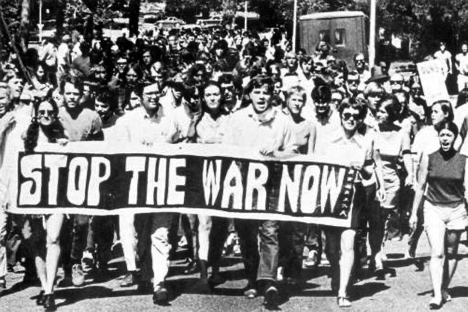
Last Wednesday was the 54th anniversary of the largest political demonstration in American history. Organized by the National Mobilization against the War in Vietnam, commonly known as the MOBE, the protest drew half a million people to the nation’s capital. They marched from the White House (Nixon’s “secret plan to end the war” having turned out not to exist) to the Washington Monument. Peter Seeger led the marchers in John Lennon’s “Give Peace a Chance.” Leftie celebrities from Peter, Paul and Mary to Leonard Bernstein joined in. The tone was serious, following as it did on the single-file March Against Death that had taken place just days earlier, each silent participant holding a votive light and a small sign naming a lost soldier.

Among the dead was a disproportionate number of second-class citizens: Black, brown and poor, the ones who couldn’t use college enrollment to defer their eligibility for the draft. These days we might have actually heard the outcry against this privilege. But back then it was fine where I came from. Black comedian Nipsy Russell had a routine he did on the college circuit: “Cram, cram, cram for the exam and stay out of Vietnam!!!!”

We lived in Washington at that time, but we didn’t march in the demonstration. Though my legs were strong, I no longer had a brain. Everywhere in DC there were young protestors wearing black arm bands. When I first noticed them, the thought flitted through my mind that maybe they had joined us in mourning our baby daughter. She had died at the end of October, ten days after heart surgery. I asked her father why these young people were horsing around in the grocery store aisle while they picked out potato chips. They were wearing black arm bands. They were mourning. How could they be laughing, I wanted to know.

Emmon told me about the demonstration. I hadn’t paid attention to war protests since the pediatric cardiologist told me that we shouldn’t put off the surgery any longer, and I had laughed at him loudly before I started crying. I can imagine the thousands of mothers and fathers who lost a son or daughter in that war blasting a raging guffaw or spitting curses at the neatly dressed soldiers who arrived with the news, though most, I would guess, only stared at the sky. The Vietnam War Memorial lists over 58,300 U.S. dead.

 And now with children being trampled in the Middle East, families blown apart in Sudan, and young soldiers dying in Ukraine, what will become of their ravaged parents? How will they steady themselves? Who will help them?

#parental grief #race #racism #war

The Wrongness of Being Black

Photo by Ryoji Iwata on Unsplash

Over glasses of wine at a summery party, a bright, friendly woman asked about my memoir, White Wife/Blue Baby. She knew I’d married across the color line — the phrase “white wife” doesn’t leave much room for doubt. But she was unfamiliar with the phrase I’d used in the title’s other half.

I told her about my daughter’s heart disease, the technical term for which is Transposition of the Great Vessels. In such cases, blood goes to the lungs to pick up oxygen, then returns to the heart. But instead of being pumped out to the body, it makes a U-turn and heads back to the lungs. Fortunately, a little blood spills across and gets pumped out. Without intervention, these babies, whose lips are usually blueish, last only a week or so. Fortunately, our daughter’s life was saved, though only temporarily, when she was ten days old and had just hours to live.

Right now there is no known cause for congenital heart disease (though chances increase if moms smoke or drink during childbearing years, and decrease if they get enough folate acid). In Transposition, at about the sixth week of gestation, somehow the major arteries connect to the wrong sides of the heart. To me, it’s a miracle that the connection is made correctly almost all of the time, when the entire embryo is no bigger than a black bean and before a woman even knows she’s pregnant.

“Was it because he was black?” my new friend asked. She wanted to know if my ex and his dark skin had caused the heart disease. Or maybe she was asking if our being from different races had been the cause.

“No,” I said, maintaining my friendly tone, “If it had been a genetic issue, being very different would have worked in our favor.”

My new acquaintance nodded, her face now a bit blank.

(But how different were we? My ex has dark skin but not so dark that he couldn’t also be part Scots-Irish, common in the South, while I’m half Irish.)

What she wanted to know was if the wrongness of being Black, its taint, its danger, its failure, had ripped into my life and stolen my child.

What do you say to someone who unconsciously says something awful? She would not have said it if a Black person had been there, of course. So it wasn’t as if she had no idea.

Still, I should have had a better answer. I should have said that race doesn’t exist. That Black and white people are no more different than, say, Swedes and Italians. Ethnic differences are biologically real, but race is imaginary. It’s used to raise people up, as Churchill did during the Blitz, calling the Brits a superior race, or for hammering people down, as in the US, or, for that matter, all over the world.

I wrote my memoir as a tribute to my daughter, who left this earth when she was eight months old. I also wrote it to continue pondering American racism. To do that, I’ve got to get used to stuff coming at me, as I did in 1968 Chicago. Holding a conversation with my ex while walking down the street took practice: as darkening frowns and stiffening body posture streamed at us, we each used one eye to scan for fists tightening or for the bulge of a gun.

I’ve got to go back on alert, not something I’ve had to do since our other two daughters, both born healthy, grew up and left the house. On alert this time not in self-defense but to provide answers that prompt the asker’s self-questioning. I’ve got to be prepared to give my fellow white people something to chew on.

On Her Own

Photo by Jacob Spence on Unsplash

“Make it a double,” Dad said to his brother, walking up to the bar in my aunt and uncle’s harvest gold fifties family room. Uncle Hank hesitated ever so slightly, then gave one of his sharp, hearty laughs as he added another shot of bourbon to my father’s glass. My brothers and I were bored in the way we were used to. My cousin Mary was older than I was, an official teenager, so she looked off when I glanced at her. My brothers and I sat around on folding chairs in the way children waited in the fifties, sipping coke, bored but not expecting not to be, while the adults, laughing and nodding yes to refills, got louder and louder. Visiting relatives was not something you could refuse to do.

Before anyone was a teen-ager, all the cousins had run in a pack at Christmas, trailing around the clusters of adults at my grandparents’ huge house. I’d lived in that house but had no memory of it. Right after the war, my grandfather converted a room into an apartment for my parents, my 3-year-old brother and infant me, turning the closet into a mini-kitchen, and did the same for another of his soldier sons. Luckily, my parents scored a house in an Illinois farmland- turned-subdivision that went on the market on a Friday and sold out by Sunday.

When it was time to leave, my father wobbled down the front steps, caught himself, then walked deliberately toward our car. My mother told my father that she would drive. No, he said. They stood in the suburban street, Mom whispering, almost whimpering, a sound that horrified my brothers and me. She refused to get in the car. We ambled around, not even glancing at our parents or at each other, trying to not be part of this, but actually listening carefully not to the words, which we couldn’t hear, but to the tone. No one on TV or on the radio had yet brought up drunk driving. My mother was on her own.

The whisper debate finally ended with Mom picking up my youngest brother, with his crew cut and snap-on tie, and sliding him across the bench front seat. Then, all ice, she deposited herself next to him without a word or a sigh. My other two brothers and I — my father’s family had grown right along with his drinking — slid across the leatherette back seat, this time not complaining about elbows or inches. My father slumped himself behind the wheel, cleared his throat and pulled away very slowly. Make-it-a-double Dad somehow got us home. I don’t remember the drive; I only remember my mother standing in the street, begging my father to do the right thing. It was our job to wait in the middle of nowhere, feeling no fear, feeling nothing, holding off feeling. We were each learning to stay in our own glass silence, walking around on my uncle’s front lawn, pretending to notice the small, tight, gold flowers on its border.

Gail Howard

#alcoholism #childrenofalcoholics