Movin’ On Up

When I met the father of my children, he was just starting a job for a new project at the Black YMCA in Chicago. (Yes, Y’s were segregated.) Jobs Now aimed to get corporations to hire Blacks. I was surprised that the focus was on jobs, when, in the late sixties, it seemed to me that jobs weren’t that hard to get. (They weren’t if you were white.) Why didn’t the Y focus on desegregating schools or neighborhoods? I knew about as much history as the average white suburbanite, unaware that when Chicago’s factories moved to the suburbs, all their Black workers were left behind. Without these massive, unionized industries and the small businesses that catered to their workers, the city’s Southside and Westside economies collapsed. American sociologist William Julius Wilson estimated that the Black working class Chicago neighborhood of North Lawndale lost 75 percent of its businesses from 1960 to 1970.  

Later, doing research for my memoir, I read what the NAACP’s then assistant secretary Walter White wrote in 1919 about the waiters’ strike in Chicago. Black waiters were persuaded to join the union, leave their jobs and walk the picket line, but when the strike was settled, whites went back to work for better wages, but Black waiters were not rehired. A job as a waiter was safe, indoors, and did not involve slaughtering animals or coming close to a cauldron of liquid steel. You worked right next to white people. For a while.

We could pile on other examples, of course, but the decision the Supreme Court rendered this summer insisted that a little more than 40 years of affirmative action had been enough to rectify four hundred years of oppression.

The conservative justices wanted to consider what happens when people today, now, really want to get their kids into a prestige college. It’s hard to care about how things are going for the ex-waiters’ great grandchildren or the laid off factory workers’ offspring when your own social mobility is on the line. The urge to move up past other people, climb higher, to be let in where others are excluded, is a deep-seated human desire. But it’s not us at our best.

#affirmative action #racialequity #chicagohistory

War Story

My mother dampened clothes with a sprinkler bottle, rolled them up and let them sit before she started ironing. My father had a screwdriver for tightening or a hammer for pounding whatever had loosened up over the week as my brothers flew through the house.

I came in off the street with salt on my upper lip and a circle of sun heat on my head. I was thirsty but I’d need permission to get the pitcher of Kool-Aid out of the refrigerator. Right away I heard the sound over the radio that I hated: the crackle of the fans, like radio static but faintly and furiously animated. My parents were listening to the White Sox game.

“Can I have—

“Shush!” came the sharp response from my mother.

They’d heard the crack. A hitter had sent a ball into the air.

“Whoa!“ the announcer said, “High fly ball!”

 My mother looked off, holding the iron in the air as steam curled up from the shirt collar spread before her. My father stared into the same middle distance. Both were frozen as the crucial seconds elapsed and I was stuck waiting, waiting before I was allowed to say what I wanted.

“And it’s foul—off the right field line.”

“You can have a glass of water,” my mother said.

It wasn’t hard to tell what I needed, and the Kool-Aid was for later.

I pulled the stool to the sink, climbed up and filled the pink aluminum tumbler that had been assigned to me. I peered over its lip, hoping, as I often did, to catch my father’s eye, but he was back with his tools.

Dad had a hard time making small talk, but after a few Manhattans with my mother, I would hear their laughter. When I was older and asked him what he did in the war, he said his job was piling the dead into trucks. Eventually, cocktails stopped loosening him up and instead shut him down, shut him totally away from all of us.

There’s a picture of Dad when he got back from Iwo Jima. His eyes are blank in a way that I didn’t notice as a child. My father was magic and perfect, and I sobbed every Monday morning when he took off for another week of selling on the road.

In Sudan and in Ukraine, men are dying, or dying inside, and children’s hearts are being robbed.

White Wife/Blue Baby

I’m using the title White Wife/Blue Baby for my forthcoming memoir. When the phrase first hit me, my psychological hair stood on end. I married across the color line in ‘68, and our daughter was born not getting enough oxygen, two facts with ambulance sirens attached to them.

When I first referred to my title in an email, I discovered that white wife is also a porn category. Invitations to purchase biracial erotica started piling up. The concept was not a white woman whose husband is Black, but a prim blonde lady who breaks her marriage vows because she suddenly can’t resist sex with a huge Black man. I opened the first one by mistake, not realizing what it was, accidently insuring that it would keep coming.  For unknown reasons, it has finally stopped, though this blogpost will probably start it again.

What I could surmise from the email titles, and what I knew from watching pedestrians stare at my crotch when I was out with my then-husband, was that interracial sex was the most breathtaking transgression Americans could imagine. Early on, I would quickly and furtively check that my jeans were zipped. But they always were, and the problem wasn’t my clothing.  Instead, the zone of privacy to which we are normally entitled walking down the street had been ripped away — privacy you don’t know you have until it’s gone.

I’m staying with the title, not because I want to do battle with Big Porn, but because while I was married to a Black man, I saw things and experienced things that a white person would have a hard time learning any other way. Things that went far beyond crotch-glancing.  Traffic stops for nothing. Chicago cops whose stares said you should die. Apartments that had all just been rented.

I call on other white partners, especially those who crossed the line decades ago, when a mixed couple was rare. It’s time to talk out loud about racism’s ability to lower you into a concrete bunker with no windows and no doors. Young white people have joined Blacks in the streets to call out racism. Let’s write about it. Let’s shout about it.

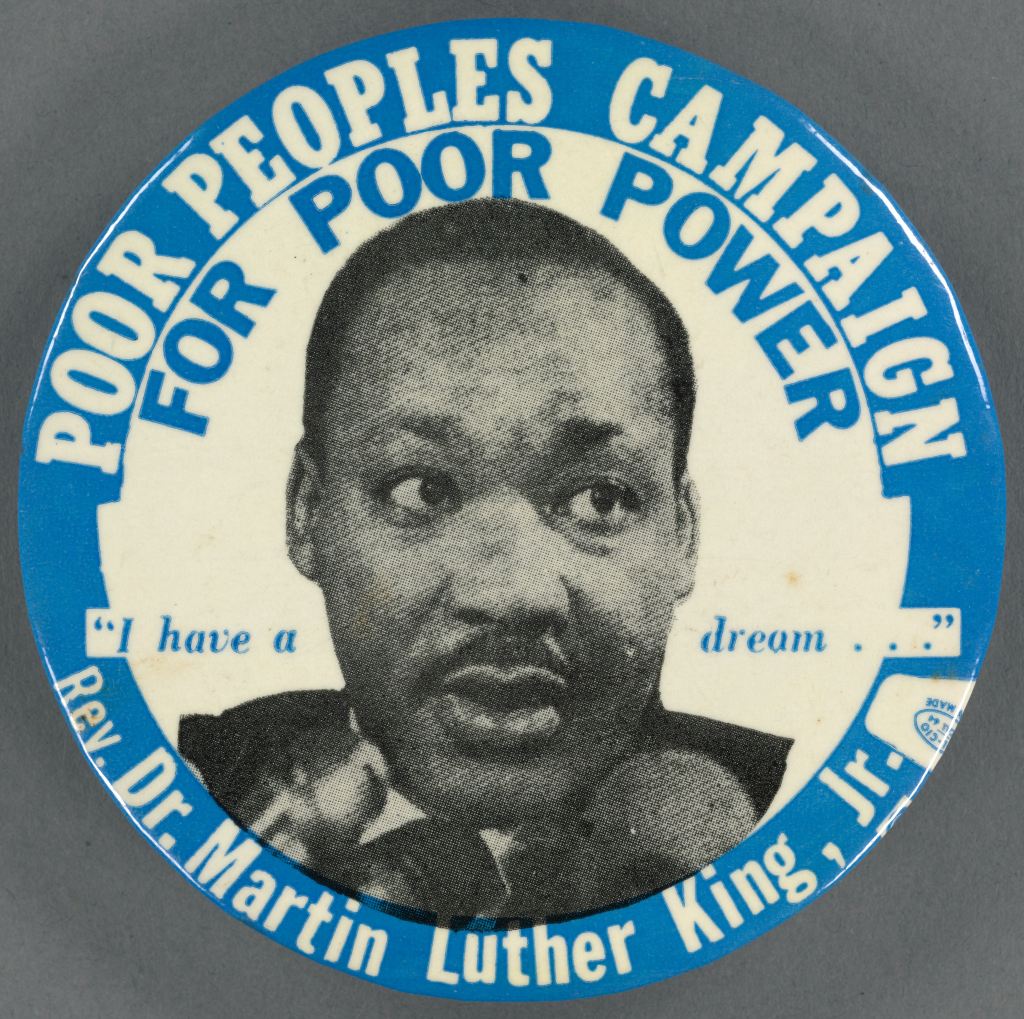
Today April 4 MLK’s Anniversary

Today April 4 MLK’s Anniversary

Fifty-five years ago today I found out that Martin Luther King had been shot when I heard someone snickering and snorting. A man was walking by the hospital room of the friend I’d come to visit. We could hear the crackle of the transistor radio the guy was listening to, so my friend, a reporter, flipped on the radio next to his bed. The news was everywhere.

The snickerer was small and thin and weathered, and he was wearing a cowboy hat, which put him just one small step above the Negroes. What had delighted him would soon set Chicago on fire. The next day, my fellow secretaries at the Catholic School Board were tense and wary. Their husbands were firemen or policemen; their neighborhoods butted up against Black neighborhoods. By noon, Black high school kids had walked out of their schools.

Our one Black secretary stared into her typewriter in silence. She was tiny and until today perpetually cheerful, ready to laugh at the slightest joke, or even at no joke at all. Her job was to integrate the secretarial staff. “Head Ni—- Up Front” or HNUF was a term I had just learned from my Black boyfriend, whom I was trying to reach on the phone.

I finally got him to answer at the Black YMCA where he worked. Sears Roebuck’s Julius Rosenwald had donated enough money to fund a new, spacious Black Y on the South Side. YMCAs in Chicago were segregated, and Rosenwald’s gift let the organization sidestep the racial justice issue. Blacks didn’t know whether to love him or hate him, the kind of debate that they were forced into over and over.

            “Hi,” I said, relieved, “Are you okay?”

            “Yeah,” he said flatly.

Then there was silence.

“I can’t talk now,” he said.

Then the line went dead.

We were dating across Chicago’s – indeed America’s — greatest fault line. We were more than dating and would be married in October of that year. Racism had roughed us up so often that I could make no sense of the fact that all Black people weren’t eaten alive by rage.

By 4:00 p.m. that day, the horizon, visible from the School Board’s 8th floor Michigan Avenue windows, was glowing red. It was fire, it was rage, it was exhaustion. It was despair.

The Wind’s Fault

Photo by Khamkéo Vilaysing on Unsplash

Learning the Palmer Method took everything I had. No matter how slowly I went, no matter how carefully I concentrated on the fat, gorgeous script on the blackboard, my capital letters came out squashed like bread packed in the bottom of a grocery bag. And wrapping your mouth around a new word letter-by-letter brought quick snorts from the kids behind you, even when they knew they’d be next. St. George’s School on the prairie was regimented in the Catholic style. The sister in charge was also teaching second grade and we were all in the same cramped classroom. “Fold-your-hands-and-face-the-front” was one word. Our textbooks were pamphlets the Chicago Archdiocese had written and stapled together and shipped out fast as the tidal wave of post-war babies loomed.

At recess, all you needed was your windbreaker and to not step in a puddle with your school shoes. The April sky was lead gray; it had rained, but it wasn’t cold. The boys, all bigger than me, were trying to catch the prairie wind by unzipping their jackets and holding the sides out like sails. Sometimes a gust would shove them a few inches backwards, and they would whoop with triumph. D’ya see that? Suddenly the wind’s noise grew, blotting out the other kids’ racket. I pulled my red windbreaker taut. Gusts went in different directions, so I had to keep adjusting my stance. Just as Sister started ringing the bell, a hard blast picked me up off the blacktop and dropped me a few inches into a puddle. It was over in a second, but my feet had been gone from the pavement. I had been airborne. The whole world had picked me up and moved me. I stood still in the puddle, letting it sink in that I had flown. My shoes had water on them, but it hadn’t been my fault.

Denial, My Superpower

My Superpower

Should you ask your abuser to recommend a therapist to help you get over his abuse?

In the psychology field, this is referred to as disassociation. You simply disconnect from an experience that is beyond bearing. But I didn’t forget Monsignor Fitzgerald’s assault. My feeling was more like what would become known as the Stockholm syndrome. Hostages in a Swedish bank robbery would side with their captors, even after being rescued, even in court. But then again, I wasn’t sympathetic to Monsignor. The memory of looking up into his horrid Roman nose as he shoved himself up against my teen-age body would stay in my head forever.

For me it was simple. Monsignor stood for the Church and the Church made sense of my existence. My relationship to him was the same as gravity. Trying to leave the Church behind would have been like trying to sprout wings and fly.

I could never have put any of this into words.

Catholics thought if you were anxious or depressed, you just needed to get a serious grip on yourself.  That’s what free will was for. When I failed at that, the family doctor prescribed tranquillizers, which wore off slowly over four hours. I could tell it was lunch time by how fast my thoughts were spinning. No need for a watch! (Snide humor was another Irish survival skill.)

When a co-worker walked into the Ladies Room just as I put a big fat pill on my tongue, I of course told her what it was. Catholics always tell the truth. When I said no I was not in therapy, she said “Gail, therapy works. Why suffer?” For some reason — maybe the increasing downbeat of the sixties– I had no answer for that.

There was only a crucifix on the wall in the small consultation room where I met with Monsignor. When he handed me a psychologist’s card and offered to pay for the first year of treatment, I didn’t connect his offer to the abuse. The year before, when my father drank the electric bill money, the parish had gotten our lights back on. I thought the parish was just helping again. When the first year of treatment neared its end, I mentioned Monsignor’s assault for the first time — as an aside. When the therapist’s jaw dropped, I frantically filled the silence: I hadn’t been hurt, I was fine, I’d gotten over it.

I was by no means over it. Instead, I had disappeared it. But I didn’t become an alcoholic or a drug addict, like so many other victims. I became a secretary. As decades passed, I let myself have more therapy, part-time college study, even grad school, circling around writing and finally zeroing in.  

My memoir, White Wife/Blue Baby will come out soon from All Things That Matter Press.

#childsexualabuse #eliminateSOLinCT #CatholicChurch #recovery

The Immaculate Conception

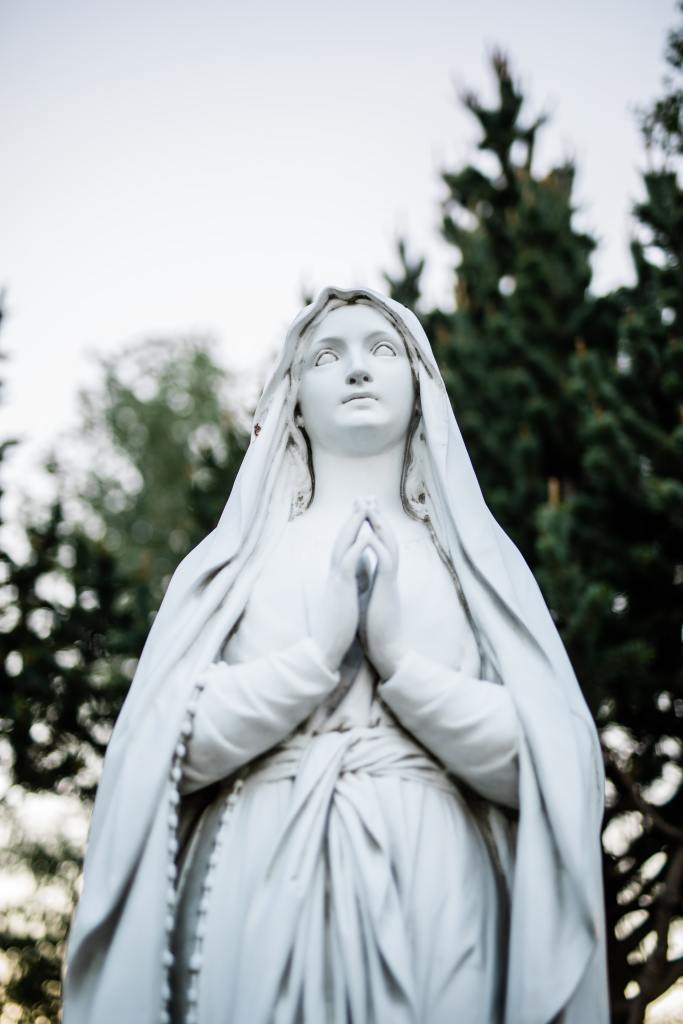
The Blessed Mother was celebrated this last December 8 for being untouched by sin. As a virgin, she was also untouched by sex, our Catholic teachers insisted, though nothing in scripture tells us that. For the faithful, sex and sin were extremely close. So when my six-foot Catholic pastor shoved me up against a wall and put his hands all over me, I could feel my brain move like an old-fashioned Rolodex, spinning frantically for an explanation. For the first time in my life, I was physically trapped, but when he bent at the knees and let out a low groan, I was able to push him away and run out of the room.

A few years earlier, in 1960, my friends and I had looked up orgasm in the dictionary, but we still couldn’t figure out what it meant. We were at a slumber party, and somebody else was calling the Rexall Drug Store in town, asking if they had Sir Walter Raleigh in a can. It was a brand of pipe tobacco. The clerk who answered the phone said yes.

“Well, you better let him out!” my friend shouted, and we all squealed.

.

We were in eighth grade, the last year of Catholic grammar school. Peering over the wall into adolescence, we were oblivious to where the sixties would take us. Four years later, when Monsignor invited me to his private library, I had written an essay on social change through collective action, but I still hadn’t kissed a boy.

An invitation to go upstairs with Monsignor had made me feel valuable, singled out, like going to the head of the class. But it was just the opposite. Since priests were God’s representatives on earth, what happened had either been my fault or God’s fault. I’d been the one to lay flowers at the feet of the Virgin during our May Procession. Now I forced myself to walk home slowly; anyone who saw me run would know my horrifying guilt. For decades, I buried it, but guilt ran me around anyway. Forty years later, the Boston Globe’s story clued me in: I was not the only one. That’s when I first felt the rage.

Interracial Marriage, Updated

In what CNN described as a ‘landmark bipartisan vote” the Senate passed a bill Tuesday protecting same-sex marriage. Hooray for a preemptive strike! The bill also protects interracial marriage, something we thought was already entirely safe given the Supreme Court’s 1967 Loving vs. Virginia decision. But now we have an anything-goes Supreme Court. Who knows what will “go” next?

When I crossed the color line in 1968, among the many things I knew nothing about were laws against interracial marriage that had only been invalidated the year before. I got the facts when I did research for my soon-to-be-published memoir, White Wife/Blue Baby.

First let me say: if you like absurdity, race-mixing is your topic.

If you were going to regulate interracial marriage, first you had to know exactly who was white and who wasn’t. Before slavery became America’s get-rich-quick scheme, intermarriage went unnoticed legally. Some colonists married American Indians. Some indentured servants married slaves. There was a considerable population of mixed-race children. Which side of the color line were they on?

Over the next 250 years, the answer was different state by state and decade by decade. In some states, you were white if you were ¼ black; in others, 1/8 black or 1/16 black. At certain points, you could cross state lines and change races. Finally, Virginia got out ahead of the problem with its 1924 Act to Preserve Racial Integrity, redefining “white” to exclude anyone of any traceable African, American Indian or other “non-white” ancestry — the “one-drop” rule.

But wait! In response, a group of prominent whites who maintained that they were descendants of the 1614 union between Pocahontas and John Rolfe petitioned to be exceptions. Naturally, their wish was granted, and they were able to remain white. In Chicago, we call that “clout.”

The Racial Integrity Act further required all citizens to register with the state according to race. Eleven years before Hitler was elected, Virginians who wanted to marry were required to hand in authenticated racial genealogies. http://www.salon.com/2001/03/08/sollors/.

Will Florida school children feel uncomfortable if they find this out? Don’t worry–Ron DeSantis has taken care of that.

Photo by Clay Banks on Unsplash.

May be an image of 5 people, people standing, outdoors and text that says 'COLOR IS NOT A CRIME 目'

Things to be Thankful For: Medicine Coffee

“Give me something that looks nice that I can run in,” I’d said to the salesman at Hawley Lane Shoes. And he did. I had just learned that we had been awarded a four-year grant to strengthen the academic skills of lively but less-than-focused high school students. These students needed to know that if they stayed in drift mode in high school, they would probably flunk out of college, including the community college. Underprepared students were NCC’s biggest problem.

Of course, just telling them that, shaking a finger at them, would have no effect. Instead, we spent every Saturday during the school year and all summer with them for the four years following their 8th grade graduation. Feeding them, listening to them, offering enrichment courses, helping with homework, feeding them some more. After a year or two, they would stop chewing for a moment and listen to us. When a young student showed up one day grinning and waving her report card, I knew we’d gotten somewhere.

My problem was that I was in my early sixties and slowing down energy-wise. And I had family responsibilities. My daughter worked in Manhattan, so I or my husband picked up our granddaughter from the after-school program every day. Though we adults do our best to hide problems from the little ones, we all know it never works. Our NCC program made a difference, but it wore me out. Big time.

One day my granddaughter appeared in the doorway of my office at home and offered to take my order. I knew to play along. We had a number of imaginary dealings; some were quite serious. This was a new one, but what to order?  

“Is this a diner or a fancy restaurant?” I asked.

“Diner,” came the answer from the 7-year-old with a scratch pad. She and her mom often took advantage of cheap and easy eats at such establishments.

“What’s the name of this diner?” I inquired.

There was a moment of silence. I could see the wheels turning.

“Couchie’s,” she announced.

“Couchie’s?” I couldn’t help asking.

Then it sank in. This was a very, very comfortable diner, catering especially to the occasional grandmother on antibiotics with yet another sinus infection.

I ordered scrambled eggs, bacon and toast. And coffee–lots of it. In a few minutes, she was back, carefully sliding a frisbee and a plastic knife and fork onto my desk.

“And here is your coffee,” she said in her pipsqueak voice, setting an empty mug next to the frisbee.

“Medicine coffee,” she announced, as solemnly as a seven-year-old can sound.

“Medicine coffee,” I sighed, “exactly what I need!”

On this Thanksgiving, a round of medicine coffee to all teachers, counselors, parents, grandparents, essential workers, and everyone in health care, and for anyone else who truly needs it!

Coming to a Bookstore near You!

The good news – the stomp-and-yell good news — is that my memoir, White Wife/Blue Baby, has been accepted for publication. When will it come out, everyone asks. It’s too early to know.  But it’s in the queue at All Things That Matter Press. (https://allthingsthatmatterpress.com/)

When I got the ATTM email message stating, “We want to put you under contract,” I was at first totally mystified. Or maybe the word is stunned. Or stupefied. I carried my laptop down to where my husband was sitting and showed him.

“I think they want to publish your book,” he said.

When I worked at Norwalk Community College, my job in the mid-nineties was to place students into paid internships. Throughout his 8-year presidency (1981-89), Ronald Reagan (not usually one of my heroes) badgered Russian President Gorbachev to lighten up on the Jews. “Gorby,” whom we all admired at the time, told him to mind his own business.  But when the Soviet Union dissolved, Jews knew to come to America. One path brought emigrants to Stamford’s Jewish Community Center.

At NCC, and at probably any community college, you truly never know who is going to show up on the doorstep. I was able to place a highly sophisticated female Russian engineer into an internship at a major precision instrument firm in the area. (They quickly hired her permanently.) Her English was quite good, and she was proud of it. Still, when she called to thank me, she was so excited, no words would come. Finally, she burst out with, “We—we—we go to restaurant!” She, her husband and their two sons.  

Looking down at the email from ATTM, I finally shouted, “We go to restaurant!” And indeed that day we did. An Italian place in Norwalk, Primavera. We were glowing, I guess. As we scooped up the last bites of our shared chocolate dessert, the owner brought two tiny glasses of Limoncello. On the house.

May all good writers have similar luck!

#memoir #forthcomingbook #smallpresspublications #racism #crossing the color line #congenitalheart disease #whitewife