Blue Baby

My infant daughter died fifty-three years ago last week. She was born not getting enough oxygen, which made her lips purply, the way kids look when they’ve stayed in the pool too long. Writing about Carolyn in my forthcoming memoir, White Wife/Blue Baby, has finally quieted my heart. After she died, her father and I stayed married, but we couldn’t do much for each other emotionally. Grieving a child solo, in silence, without asking for help, is a terrible idea, but it was normal for the early seventies. Before the 19th century, one in three or four babies died in their first year, at least in Europe. But by the early 20th century, antibiotics, maternal health care and improved hygiene had made infant deaths fairly rare in the West. Even a bit peculiar.

Grief turned me into a quiet, soft-spoken, bleeding banshee. In the early years after Carolyn’s death, screams were still coming out of the top of my head. I was not able to meet a new person without announcing that my daughter was born with heart disease and she died when she was eight months old.  I’d sputter out that sentence within a minute or two, no matter what the topic of conversation might be. At which point I’d hear the voices scream, “How horrible! Who did that happen to?” My silent reply was that it had happened to me. I was a split personality. Grief was certifiable madness.

The pain lessened over the years, but I also got better at figuring out ways to keep it from barging into the present. When other parents would ask how many children I had, I’d keep them busy by saying something like, “I have a daughter who is 12 and one who is 8.”  This was a true statement, since after Carolyn died, we went on to have two perfectly healthy girls. Today I just say, “I have a daughter who lives in New York and a daughter here in CT.” There is no need for a head count; no one needs me to add, “And I have one daughter who died.”

And these days there are real blessings that also complicate the count.  My then-husband had a child before he met me. She looks exactly like him and has the incisive style of thinking and moral courage that so attracted me to him when we met in the sixties. She is half-sister to my birth daughters and calls me “Mom,” which makes me proud. Joined across the color line, we are an American rainbow family, firmly planted in the center of American history, scars and all.

White Girl Mistakes: The Gun

Gunpoint

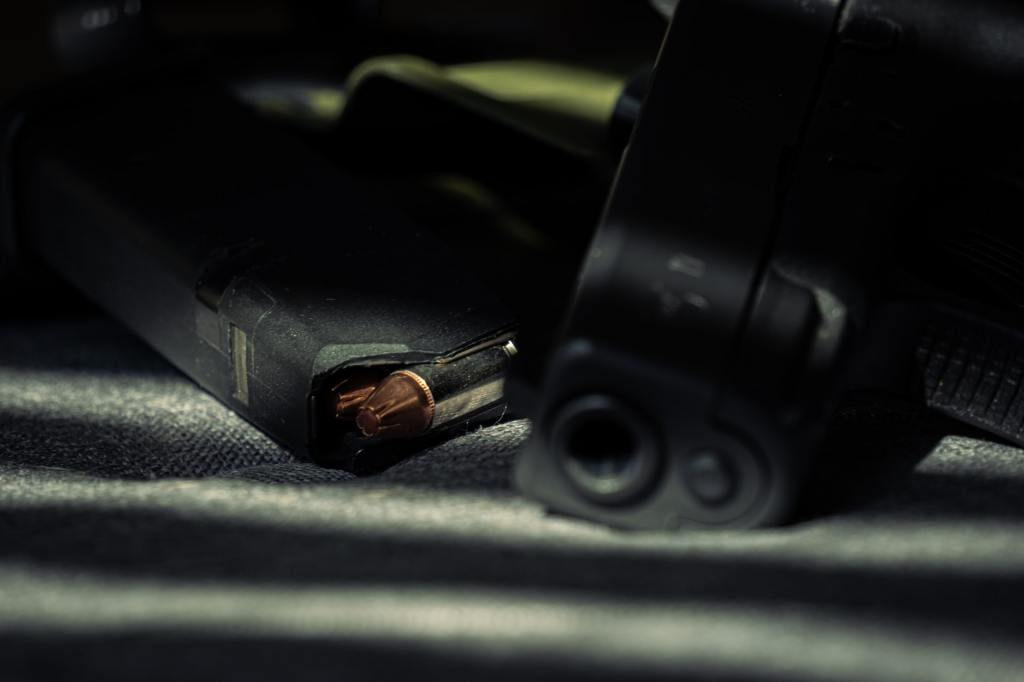
The doorbell finally rang. I’d been waiting, hurt, while my entirely Midwestern baked chicken and Idaho potatoes dinner cooled in the kitchen. I was going to definitely tell Emmon how I felt. But when I swung the door open, he came in hurriedly with hunched shoulders and without meeting my eyes. Sitting on the edge of a chair with his hands clenched, he laughed the light laugh that’s not about something funny. Then he told me what happened.

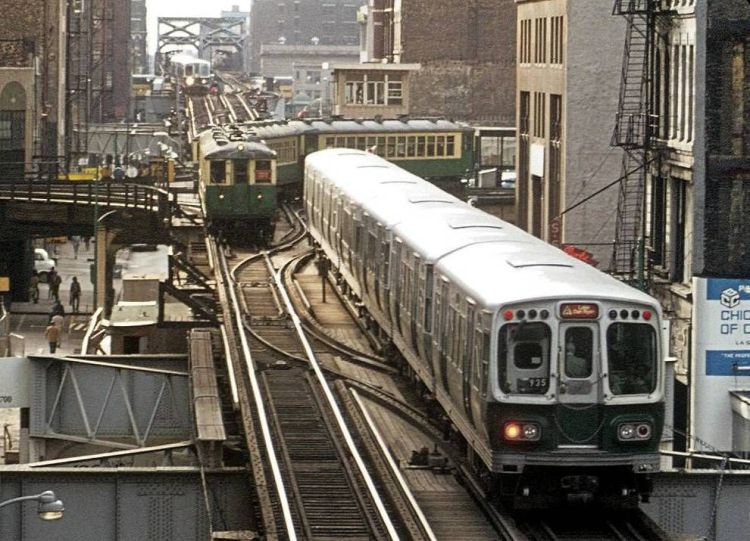
He had been waiting on a dark street corner to change buses – it took two buses and an L to get from the Black near Westside to the White far Northside where I lived. A hunched-over old man was a few yards away under a streetlamp, and there was a cop walking his beat. The old man scowled and muttered to himself and occasionally burst out with curses aimed nowhere. Suddenly, he pulled a small handgun from his overcoat pocket. He took aim at Emmon, then lowered the gun and put it back. The patrolman watched from the shadows. Emmon turned toward the cop for help, afraid to speak or react. The gun came out again, the old man’s voice rising and falling as he passed it back and forth from hand to hand. A bus lurched to a stop, the wrong bus, and Emmon dove on.

“Maybe the cop knew the gun wasn’t loaded,” I ventured.

He looked at me. His hands were shaking. I tried to hide the fact that I was angry, not about his being late but for some reason I couldn’t quite identify.

“The cop would have been the only witness. One more street fight, one more dead colored,” Emmon whispered.

Before he’d finished explaining, the urgency went out of his eyes. I couldn’t listen and he could see it. Walking hurriedly into the kitchen, I knew I was leaving something behind, something I might not be able to get back.

We’d only known each other for a couple of months, but we’d fallen for each other immediately. When he introduced me to Coltrane, it was as if I’d found something I’d lost a long time ago. We liked to stretch out on the living room floor, letting my roommate’s cat decide which of us to sit on, sharing stories about our AWOL fathers, laughing about what had made us cry.

Now I wanted to run from the idea that the police would watch while one man took aim and fired at another he didn’t know. I’d indeed seen menace in cops’ eyes when they saw us on the street, but surely they wouldn’t stand around while someone got killed. Would the police, charged above all with protecting life, fail to recognize that a life was worth saving? I wanted to push this question back at Emmon, make it his mistake.

“Are you sure the cop wasn’t going to do anything?” I asked when he joined me at the kitchen counter. His story seemed preposterous.

 His forgetting that I knew nothing about being Black, that our love, which turned out to be genuine, didn’t give me x-ray vision into his world, was about as foolish as my thinking I could understand how Blacks had to live because I was a liberal. I hurried the potatoes out of the towels I’d wrapped them in and nervously slid the plain baked chicken, daringly seasoned with garlic salt, onto a plate.

I don’t remember what we talked about at the small secondhand table my roommate had found. There was a candle stuck in a Chianti bottle and oddball, unmatched dishes. Emmon concentrated on devouring my home cooking, as he always did, while the cat wove figure eights around our legs. Why didn’t the cop fear for his own life? There was no answer to that question, because it wasn’t asked. No one wanted to talk about it anymore. I’d lost something I didn’t need, which was the illusion that we were twins under the skin.

Queen Elizabeth II, Defender of the Faith

It was St. Patrick’s Day. With her jaw set, my mother dripped green food coloring into our little glasses of orange juice. We were careful not to smirk unless her back was turned, but she picked up on our irreverence anyway.

“A million people died, and the British could have stopped it,” she hissed softly.

We could care less about history, but my mother felt it in a visceral way. Her parents were born in Ireland.

My mother’s target was William, Sovereign Prince of Orange. The Brits had bullied Ireland for centuries, but in 1691, William, now Protestant King of England, Ireland and Scotland, really brought the hammer down on Irish Catholics, depriving them of their land and throwing them out of the government. From then on, the Brits hammered away at Catholics, denying them the vote, closing their schools, keeping it up for so long that they forgot that most of the problems in Ireland were of Britain’s making. Their plan had been for Catholics to quietly work the farms that had been stolen from them, producing a little food for their families and a lot of cash for their conquerors. Instead, there were unpleasant uprisings and, due in part to Ireland’s poor soil, unreliable crop yields. When the crops failed spectacularly in the mid-19th century, the British sighed with impatience. The Irish had long ago lost the war, so they were losers, right? Irishmen were always drunk, and the women just kept having babies. Brits complained of “famine fatigue.” They were sick of rescuing the Irish from themselves, so they finally decided to just not do it.

Neither Queen Elizabeth II nor any of her predecessors has ever apologized. So far as I know, there has never been an official acknowledgement of the colossal damage the British did all over the globe. The Queen’s replacement, her son, Charles, has tried to enlighten the world about the climate crisis. Maybe he will open his mouth and speak about his country’s real history, but it’s not likely. Americans are right now at the raw and painful edge of coming to terms with their own country’s history of oppression, and so far it’s not going well.

Buffalo

On a Saturday in May in Buffalo, ten people died trying to buy groceries. Survivors told us how it happened: Blacks hunted down in the aisles and blasted with what was essentially a weapon of war, a young guy with curly brown hair carrying out his grisly mission. As Ta-Nehisi Coates has told us, Latinate phrases like white supremacy and white privilege fail to convey the violence at racism’s core. In his book, Between the World and Me, he lays it out:

“racism … dislodges brains, blocks airways, rips muscle, extracts organs, cracks bones, breaks teeth…”

In Chicago, in the sixties, when my soon-to-be husband Emmon and I loved each other across the color line, I could feel the edge of violence everywhere we went. It crackled in the air around us with such consistency that if another white woman had fallen in love with someone black and then asked me what to do, I would have yelled “Duck! Get down! Get behind something substantial!” The cops were everywhere. We were pulled over for offenses such as turning left from a foot too far over to the right on a quiet, empty residential street. How long had they been following us?

A few months after we left Chicago – I should say fled Chicago – Fred Hampton, leader of the city’s Black Panther Party, was murdered. When I saw the headline, I felt a clutch of panic. The news story said that the cops fired in self-defense. I knew that was a lie and I was convinced they would get away with it. I thought Fred Hampton would be forgotten, that his story would be folded into all the lies that ruled Chicago. Fortunately, I was later proven wrong. But as I read the news story on that day in 1969, the dread I’d felt while living in Chicago, that I’d had to bury inside myself in order to put one foot in front of another, came flying back.

In Chicago, no one ever threatened me when I was alone. A petite Irish/French Canadian American in matching shoes and bag is not a target. But when Emmon and I were together, I saw fury rise off the backs of white guys hunched over a bar; I saw bone-breaking hate when street patrolmen glared at us and put their hands on their night sticks. When I tried telling my white office co-workers what was happening, they just figured my negro boyfriend was brainwashing me. I could see the pity in their eyes.

By live streaming, Buffalo’s assailant thoroughly demonstrated Ta-Nehisi Coates’ point about racism. I guess the 18-year-old gunman wanted to make sure we knew what white supremacy really means. But Florida now has a law to guarantee that white children are never made uncomfortable by the truth. White. Blanca. Blank. No information. White — we Euro-Americans should disavow that word.

White Girl Mistakes #5

Photo by Pixabay on Pexels.com

 We arrived in DC as fugitives from the law. Emmon had jumped bail after cops staked out our apartment and arrested him for unpaid parking tickets. Tsunamis happened often in Black Chicago; there was no point in counting on things not being swept away. So when we rolled up to his old friend Vernon’s new, substantial, split-level brick house with its nicely manicured lawn, it was like we’d landed on Mars. We pulled into the driveway next to their late model car, and Vernon’s wife came out to greet us. After introductions, she took me aside and reassured me that their earlier caution to Emmon not to marry a white woman hadn’t been meant as a rejection of me, only that life as a mixed couple could be very hard.

“You are welcome here, okay,” she said, laughing lightly, smiling, looking into my eyes.

It was July of 1969. Vernon had offered Emmon a job, then invited us to stay with him while we found a place to live. Gwen worked for the Department of Immigration, while her husband was making his mark in urban economic development. The federal government had started hiring Black people way back before anyone else, and a middle class had grown up around the nation’s capital that was different from that of any other city. At the dinner table that night, their two children were required to tell us about their favorite after school activities. As they shyly described their roles in the band or theater, I could see Emmon relax.

One night very late we heard the phone ring, then the garage door lumbering up. When Gwen returned with Vernon, he was loud and drunk as she guided him back into the house. It made my hair stand on end—drunks like my father terrified me.  The next morning, over breakfast, I blurted out that she should not allow her husband to go to bars like that. Vernon and Emmon had left for the office, and Gwen was about to leave. She patted my hand and told me firmly that it was none of my business. Her even-tempered reprimand snapped me out of my nightmare about alcoholics. Instantly, I felt embarrassed.

But if Gwen had been white, would I have dared to tell her how to manage her personal life? A white woman who was ten years older than me, who had quite a bit more money than me, who was letting me stay at her house and who had just given me breakfast?  I think we all know the answer.

In Chicago, Emmon had been pulled over for so many phony moving violations that his license had been suspended. On the street, people stared at my crotch, and every patrolman had murder in his eyes. But no one white ever seemed to notice. Racism was everywhere and invisible to all white people except me, I thought. But that wasn’t quite true. The racial hierarchy I’d been raised on was still operating — invisibly —  in the far reaches of my mind.

Gwen let my “advice” roll off her back. She probably had other white friends who unconsciously insulted her on a regular basis. She was one of those Black people who stick with believing in America’s highest ideals, who, with their ancestors, did so in order to fend off despair, to shut down hate and hopelessness, who’d done more work to keep their eyes on the U.S. Constitution than white America had any idea about.  Ketanji Brown Jackson is another. In honor of her ascent, and out of respect and admiration for her and Gwen and the multitudes of other strong Black women – including my daughters — we should all look inward.

White Girl Mistakes #4


Our Saturday newspaper was folded to the real estate section, and I was wearing my trusty Keds. In the sixties, a lot of Chicago apartment leases ended October 1, so September was like a city-wide game of musical chairs, with the best places going to the quickest, most organized players. The bright morning skies filled me with nervous enthusiasm. Since my fiancé and I were from opposite sides of the color line, we thought it would be cool to live near the University of Chicago, liberal bastion that it was. But close to the University tuned out to be too expensive, so I’d circled ads for the neighborhood just a bit farther away. Nope! Nobody there hesitated to say no, no, that unit’s gone — just rented. Or to go mute and slowly shut the door. We tried the far Northside, across the line from Northwestern University. Same deal. On Sunday, at an open house with balloons and banners for a brand new, moderate income building on the near Westside, a cop looked at us and spat in the gutter.


On Monday, Emmon called me from his office. His boss had given him a tip. A woman from a far south suburb had a place she could show us in Lincoln Park, one of Chicago’s hippest upscale neighborhoods. The apartment was tiny, dirty and a little too high for our budget, but we took it. I never learned why this ordinary White lady in matching shoes and bag was willing to rent to us.


Getting married didn’t make us legit, the way I’d so very naively hoped. Glaring pedestrians, stone-faced government clerks, getting pulled over, cops writing up phony tickets — Chicago slowly wore us down. When our first child was born, Emmon went out East and found a job in D.C. His old friend and new boss Vernon even let us stay at his house while we searched for a place to live. 


With the memory of Chicago’s landlords still fresh, I devised a system for weeding out trouble before it was staring us in the face. My plan had three steps: first, circle ads for one-bedroom apartments we could afford. Second, call the landlord and ask if there were parking, laundry—tight-budget family amenities. Third, ask if they adhered to the Civil Rights Act of 1968. It was this law that had finally addressed discrimination in housing. After a few landlords told me that no, they were sorry, but no, I went to Emmon in despair, and he turned around and went to his friend. Vernon made a call or two, and soon we were moving into a spacious apartment in a well-kept blue collar Black neighborhood.


Years later, when I would tell my Black friends about my three-part plan, they would burst out laughing.


“It’s so you, Gail,” my friend said, “so you!”


I was known for being organized, but in this case I’d organized mere futility. Instead of launching my solo phone crusade, what I should have done was learn from the Black people around me. There wasn’t just a “Green Book” that let you know who would offer you a hotel room on the road; in fact, there was an extensive Black network about all kinds of things. I’d seen it work once, when we were led to our first apartment in Chicago, this unwritten system of tips and connections. In fact, it had worked perfectly, but I wasn’t ready to trust it.  I was beginning to see how deep racism ran, but I couldn’t yet see all the ways Blacks had devised for surviving it.   


#race

#racism 

#chicago history

#crossing the color line

#white wife


White Girl Mistakes #3

Ahmaud Arbery’s Murder Trial

“Turning Ahmaud Arbery into a victim after the choices that he made does not reflect the reality of what brought Ahmaud Arbery to Satilla Shores in khaki shorts, with no socks to cover his long, dirty toenails,”  Defense Attorney Laura Hogue said in her closing arguments.

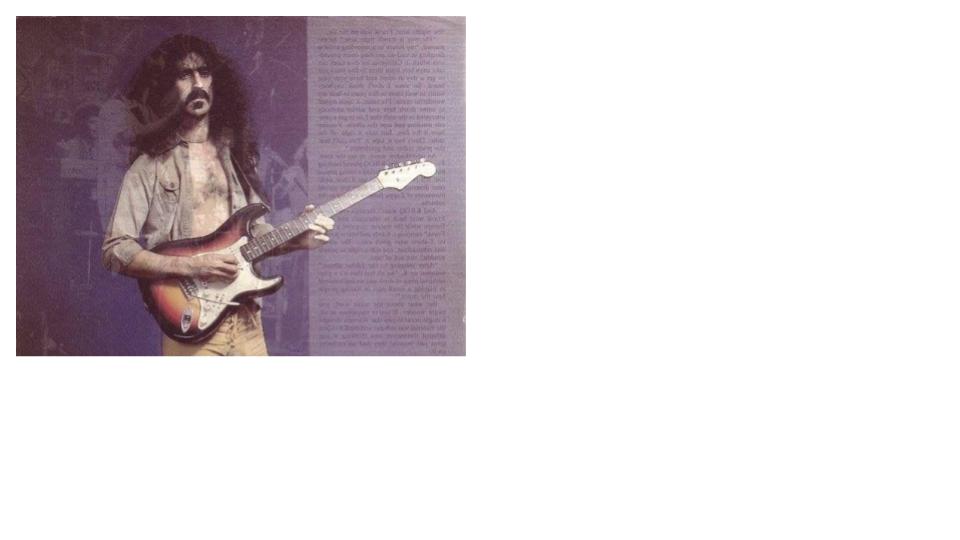
Though Hogue has been a lawyer for 30 years, she is still too young to remember Frank Zappa’s 1968 song for the Mothers of Invention, “What’s the Ugliest Part of Your Body?”

As Zappa’s lyrics pointed out, there are differing opinions:

Some say your nose (hey)
Some say your toes

Hogue is in the latter camp, apparently. She may be relatively young, but her thinking is old school. She found a way to slip in the term “dirty” to describe a black man, what she apparently thought would be a comforting throw back for the jury. But the racism didn’t start with her closing remarks. As most everyone knows, the jury was nearly all white, the original prosecutor forbade the arrest of one of the defendants (he had worked for her), and none of the defendants was arrested until a video surfaced a full two months after the incident.

Maybe out of a desire to start rewriting Georgia’s ground rules, the men who hunted Arbery down and shot him were all found guilty of their crimes.

Georgia needed this verdict. We all needed it. What is the ugliest part of your body? While some say it’s those little parts that sort of stick out, Zappa asserts,

“But I think it’s your mind.”

Gregory McMichael reported to the 911 operator that his emergency was “a black male running down the street.”

How many of us have cringed when we see a Black male jogger coming at us? I have, then felt like an idiot because I’d spent a decade in an interracial marriage. In my defense, I can say that I was nervous, on a city sidewalk I’d never been on before. And I hope that the jogger had seen enough purse-clutching White women that my fear hardly registered.

Cleaning racism out of our minds is almost impossible. That’s why we should work on it every day.

White Girl Mistakes #1

The Accident

When I started dating across the color line in 1967, I was pretty sure that I could deal with Chicago racism. Losing my father to drink and being sexually assaulted by my pastor were probably my fault, so being disapproved of – well, so what?

One night my boyfriend Emmon borrowed a car. On the L, my far Northside apartment was an hour from where he lived a little south and west of the Loop at the Young Christian Workers House. He and a bunch of other young, serious-minded Catholic guys were going to save the world from segregated labor unions. They did their best.

The dented-up VW bug we picked up from his friend had a sketchy coat of flat black paint. The upholstery, if you could call it that, had the smell of oily dust, the kind that only old cars have. Together now for a couple of months, we were headed toward Old Town, our leftie hang-out, speeding along and feeling the glorious cool breeze through the open windows. It was as if Emmon had walked up to me through the gray blur I’d been living in and started making me laugh. I almost didn’t know what to do with the happiness. But as we cruised north on South Shore Drive, what had started as a grumpy conversation was becoming an argument:

“You said you’d pick me up at seven,” I complained.

Emmon turned toward me and whispered tensely, “I never said that!”

He turned back to the road just in time to see that we were headed into the ninety degree turn that the Drive, built as a scenic parkway in the ‘30’s, was famous for. Frantically, he heaved into the turn, narrowly missing the concrete barrier while a great gust of wind came off the Lake and broadsided the car.

In an instant, the road noise stopped. I was puzzled by the silence, unaware that we were airborne. My mind switched to the curious slow motion that goes with an emergency. The VW had flipped and come down on its roof. Now the car was spinning sideways across four lanes. Sparks appeared next to my eyes — angry, yellow sparks that cracked and popped. I could smell the singed pavement. The screeching, howling, grind of metal on concrete became a dead-pan thought:

“This is the loudest sound I have ever heard.”

Finally, the spinning stopped and everything was silent again. With no more sparks, I could only stare into the blackness and smell the burnt metal. I didn’t know where Emmon was. Dread swept into my heart. Then he reached over and put his hand on mine. His touch brought back all his tenderness and teasing, the way he snickered at my crooked baby toe.

We creaked open the doors and crawled out. Now I was shivering. Another car had stopped to see if we were all right.

“That was some spin out!” exclaimed the long-haired young white guy as he walked quickly toward us, “Are you okay?”

“Hey man, thanks for stopping,” Emmon said.

He guided me to a safe spot, then walked back toward the VW where it sat in the far right lane.

“I bet we can turn this thing over,” he called. His tone had gone from shaky to bravado.

The hippy guy ambled to the side of the car, sizing it up, then stood next to Emmon.

“One. Two. Three!” they shouted in unison.

They gave the car a good heave, and, to my amazement, it rolled and lurched and sat upright.

“Why on earth does Emmon think turning the car over is a good idea?” I said to myself. “Maybe to make it easier for the tow truck.”

“Okay!” yelled the young guy, pleased with himself, dusting off his jeans.

Emmon and the Good Samaritan shook hands before he went back to his car and drove off.

“Let’s go,” Emmon said, motioning me toward the VW.

“What? We can’t go. We have to wait for the police!”

We’d almost been killed and the roof of the car looked like it was still boiling. We’d have to tell the police that we had been arguing. The cop would frown as he took notes. It would be like going to confession. I’d feel guilty, embarrassed, but we had no choice.

“We have to get out of here,” Emmon insisted.

I stared at him. Apparently, Emmon had no plans to tell the police that there’d been a crash, much less why it had occurred. But in my world, auto accidents weren’t secrets. You can’t just act like nothing happened. We’d have to wait for a cop to come along.

“What if the car isn’t drivable?”  I asked, stalling for time. “We could get hurt.”

 “We’ll go find someone who can look at it,” he said, guiding me into the passenger seat.

Cinders trickled off the door as Emmon slid gingerly behind the wheel. When the engine miraculously started, he rolled carefully out onto the Drive. I held my breath, waiting for wheels or bumpers or at least the rearview mirror to fly off. Our mouths were full of grit.

How could Emmon want to escape the help we needed from the police? Each time we had encountered them on the street, they had glared at us menacingly in a way I’d never seen before. But certainly the police would drop that sort of thing in an emergency. I still needed to believe that the world beyond my bashed-up childhood was more or less put together right, and that things like racism only went so deep.

By the time we married (1968) and had a child (1969), we’d been kicked around by a series of events that were as shocking as our auto accident. I’d learned to fear the police as Emmon had shown me, to be ever vigilant, even while deep in conversation. Whenever we walked down the street together, we filtered out all the ugly looks, focusing only on a certain kind of anger, then scanning bodies for the bulge of a gun. But even though I’d learned some street smarts, it took many more years for me to understand the hidden power of racism. Because learning about that meant learning about myself. Understanding racism is like understanding human nature. I’m still working on that.


 

White Girl Mistakes #2

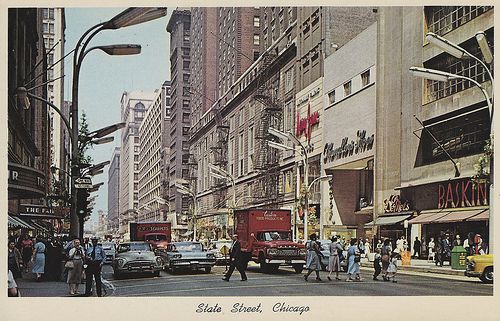
State Street

Where I came from, a suburb right outside Chicago, people knew we had done the wrong thing to Negroes. Still, they weren’t sure they could side with Martin Luther King, whose namesake had defied the Pope. And how bad were the problems, anyway? The Catholic schools I attended mid-century taught Chicago history that was mostly good news: settlement houses like Hull House had helped thousands of European immigrants settle in. No one mentioned that these neighborhood mainstays were segregated, or that they clued newcomers in on who would be beneath them, who was at the bottom of American society. Decades later, doing research for my memoir, I learned that in 1915, for instance, the Gads Hill Social Settlement House declared its blackface performance for new Polish arrivals “a great success.”

After dropping out of college mid-semester and drifting backwards into my summer job, I surprised myself by starting to date a guy from across the color line. One day, very early in our relationship, Emmon and I decided to do a little shopping in the Loop. Being there brought me back to my suburban childhood.

In the sixties, State Street’s wide sidewalks would fill shoulder to shoulder with families from the suburbs or from the old neighborhoods. Few women still wore white gloves, but they had ironed their pleated shirtwaists. I remember the rubbery whoosh of the revolving door as my beloved grandmother led me into the cathedral-like interior of Marshall Fields, how her posture stiffened and her chin rose. Born to scrapper Irish immigrants, she’d gotten a job modeling fur coats when my elegant, introvert grandfather lost his heart to her. He made a ton of money on LaSalle Street, Chicago’s version of Wall Street. When the crash came, they had to let most of the servants go. A decade after Nana had last taken me for a snowman sundae in Field’s Walnut Room, with its shimmering three-story tree, I was walking with Emmon down State Street when I caught a glimpse of two patrolmen heading in our direction. Before I knew what was happening, my new boyfriend’s presence melted to the side.

Daley’s Finest were wide in girth, at ease, well-armed. They were walking in the crowd with a confident swagger. Suddenly, they stopped and stared—really stared. I glanced behind me for what might have caught their attention – a drunk staggering, about to fall, a pickpocket – then back into their hard eyes. One put his hand on his billy club. I followed Emmon away.

So far Emmon had said little about racism or he spoke in code, as if it were an embarrassing family secret.  But now, on the other side of the street, he looked squarely into my confused face and said,

“Gail, if I accidentally brush up against a cop, or if a cop ‘accidently’ brushes against me, the police report could read that a Negro male had assaulted an officer who had in turn been forced to subdue him.”

“Oh,” I said, walking on next to Emmon, too stunned to close my mouth.

I thought about the cold rage I’d seen in the patrolmen’s faces, the way their gait had slowed and their big, muscular bodies tightened. Clearly the message was violence; it just wasn’t clear why it was being sent. I knew the city had a vicious race problem, but the police were supposed to be neutral.

The worst thing about the incident was Emmons’s idea that the cops would actually start something. That the police created problems and didn’t just solve them was a real flip. Could it be true? The menace not just in their eyes but in their jaws and shoulders left me totally confused and physically shaken. The word “subdued” repeated itself over and over in my mind.

This was my first serious relationship. The loud, goofy boys I knew in my Catholic parish were beneath me, of course, but I made no real effort to meet any others. I was shy, we had no car and practically no money. But there was a deeper reason, one that I kept to myself. I had learned through violence that I attracted what was ugly in men, so nothing could change the fact that I was ugly. After we were introduced by my roommate, Emmon pursued me in a friendly, light-hearted way. For some reason, it worked. Soon we were whispering stories to each other about our AWOL fathers. I felt listened to in a way I was deeply hungry for.

It would have been fine with me if people on the street had left us entirely alone: I needed time to figure out who Emmon was and what a relationship might actually mean. But instead, just the opposite happened. Pedestrians reacted with looks that combined shock, revulsion and irritation, as if they had just missed stepping in excrement. I took it as proof that a lot of people were just plain stupid. I insisted to myself that the idiocy of individuals, no matter how many there were, was not going to deprive me of my happiness. But the patrolmen’s glare was now adding a completely different element. Soon I would see that the police don’t just maintain law and order; they also maintain the social order. It was in their unwritten job description to threaten us. That’s what we are being asked to consider now, with critical race theory, or whatever you choose to call examining our present social structures through the lens of the past. It was never just about individuals, and the behavior of the cops that day was my first clue.